


7 Tips for Choosing Your First UTV
7 Tips for Choosing Your First UTV
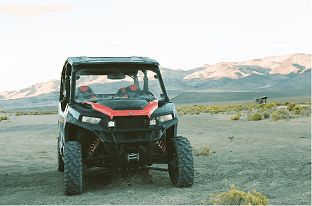
Are you interested in purchasing your first utility task vehicle (UTV)? These specialty vehicles can be enjoyable to drive and are designed to serve numerous work applications. First-time UTV buyers may be confused about which make or model to get, given the wide range of options available. After all, retailers such as Westshore Marine offer dozens of excellent UTVs in different configurations from various manufacturers.
In this guide, we will examine seven essential tips for choosing your first UTV to make the selection process easier and to ensure you find the perfect one for your needs. So let’s dive into it.
1. Understand the UTV’s Purpose
UTVs can be used for recreation, sports, or utility purposes. Many UTV manufacturers construct specific models with one of these purposes in mind. First-time UTV buyers should therefore have a good understanding of what they intend to use their vehicle for.
Some common UTV applications are described below:
Utility
Utility UTVs are mainly created for work use. Such UTVs come in many different shapes and sizes. However, they often feature a rear bed designed to hold tools or construction materials.
Utility UTVs aren’t typically designed to hit high speeds to turn right corners. They have large tires for stability and are slow to accelerate. This makes them a poor choice for sports applications or maneuvering through trails. However, they could be a great choice if you need a vehicle to move around a farm quickly or to haul equipment.
Polaris’ Ranger XP 1000 Northstar Ultimate Crew is one of the most popular utility UTVs available today. This model features a 93cm cargo box for carrying tools and a “plow mode” for plowing snow. This vehicle would be perfect for driving around a farm or clearing snow around your property or neighborhood.
Sports
Sports UTVs are notably different from utility UTVs. These specialty vehicles feature high-power engines and advanced suspension systems to help drivers get the best performance from their vehicles. People may use these UTVs for racing, trail riding, rock crawling, or dune riding. However, specific models may differ in these areas.
For example, Polaris’ RZR XP 1000 High Lifter is designed to traverse deep muddy environments reliably thanks to its 14-inch ground clearance and 81-inch wheelbase. Similarly, Polaris’ RZR Pro XP 4 Ultimate Crew UTV features 22 inches of usable suspension and can easily alter shocks. This gives riders the freedom to push their vehicle through various terrain types, such as rocky or dune environments.
Recreation
Recreation UTVs can be viewed as a cross between utility and sports UTVs. These UTVs are designed to reach high speeds and maneuver tight corners. However, you can also use them to carry loads and perform certain utility functions.
This makes them an excellent middle ground for users seeking power and performance that can also be applied to different work applications. For example, Polaris’ General XP 4 1000 Trailhead is a high-performance UTV with extra external armor and a GPS to help drivers explore trails confidently. It also comes with a sturdy cargo box designed to hold 600 lbs., making it great for many farm applications.
2. Decide How Many Passengers You Would Like to Fit
UTVs stand apart from ATVs or quad bikes because they’re designed to fit more than one passenger. This makes them excellent for transporting workers between worksites or simply giving guests a tour around your farm.
Modern UTVs may be able to accommodate anywhere from two to six people at once. Vehicles with a single row of seats may typically fit two or three riders, while those with two rows can usually fit between four and six passengers.
Three-passenger or six-passenger UTVs typically feature bench-like seats, while those designed for two to four passengers typically have individual seats. This knowledge can be helpful if you intend to squeeze some extra passengers onto your UTV in specific situations.
3. Review the UTV’s Tire Type
UTVs also differ in terms of tire type and number. Most of these specialty vehicles have four tires. However, some UTVs may have up to eight tires for additional stability when traversing. For example, the Argo (ODG) 750 HDI is an amphibious UTV with eight tires capable of driving through shallow water environments.
Different UTV models also come equipped with different tire styles. This includes:
All Purpose Tires
All-purpose tires have sturdy lugs that are between 0.75 and 1 inch in length. They are spaced apart to help them grip rocks and other objects when the vehicle is traversing uneven terrain. Such tires are easy to clean as their lugs do not typically trap rocks or sticks.
Sand Tires
Sand tires are meant for sandy environments where other tires would typically experience poor traction. These specialty tires have pronounced paddles to help them move around in environments.
Sand tires should never be used on hard-packed or paved surfaces as it may damage their paddles. For this reason, you should choose a UTV with sand tires only if you intend to drive them in sandy environments.
Mud Tires
UTV mud tires stand out for their distinct claw-like lugs. These tires are designed to be heavy-duty and can take a beating in unforgiving environments. Their wide tread patterns make them ideal for gripping roots and rocks as the vehicle works its way through muddy settings.
Sport Tires
Sports tires or “hard pack” tires are designed to work in different environments. They have smaller and narrow lugs than all-purpose tires and resemble the off-road tires found on trucks. They can be driven on paved surfaces and are generally quieter than most other UTV tire types.
4. Check the Engine Size
UTV models greatly differ in terms of engine size. A larger engine will give you more power, which is great for quick acceleration and hitting high speeds. However, it may also help boost the vehicle’s towing capacity if you intend to use it for work purposes.
If you intend to use the UTV for light farm work or to ride trails, you should be fine with an engine rated at 800 cc or less. If you’re looking for a sports UTV with fast acceleration, it is best to go with one with an engine rated at 900cc or more.
5. Consider the Cabin Type
If you intend to use your UTV in a variety of weather settings, it is essential to consider the cabin type before making your choice. Modern UTVs typically feature different types of enclosures. For example, Polaris’ Ranger Crew XP 1000 model features a metal cabin frame without doors. This UTV’s exposed design may make it a poor choice for owners who intend to drive it in rainy or snowy environments.
Polaris’ Ranger XP 1000 Northstar features a fully enclosed cabin that protects drivers and passengers from weather elements, making it a better choice for rainy or snowy environments.
6. Safety Features
UTVs also differ in terms of their safety features. While most UTVs feature a protective structure composed of tubular bars, others may have vulnerabilities such as door-less designs.
Many UTVs are also equipped with sturdy bumpers designed to protect occupants from collisions. Such features are especially important if you intend to use the vehicle for sports applications or in dangerous terrain.
Some UTVs come with built-in handhold designs to offer passengers extra support while the vehicle is moving up or down an inclined environment or over objects. Be sure to check that your chosen UTV comes with these safety features before making your choice.
7. Consider Your Budget
UTVs vary greatly in terms of price. The low-end UTVs can cost between $12,000 and $15,000, while high-end ones can exceed $40,000. The good news is that more expensive UTVs are not necessarily better than their more affordable counterparts. For example, Polaris’ $22,000 Ranger 1000 Crew model can compete with many higher-end models in terms of performance and durability.
Oftentimes, high-end UTVs are priced higher because they come with added bells and whistles such as GPS tracking or heated seats. Such features can be nice to have, but they may not be necessary for every driver.
Making the Right Choice
Prospective UTV owners should review the above list of tips before heading out to purchase their first UTV. If you’re still having trouble choosing the right vehicle for your needs, you should consider renting different UTVs and trying them out yourself.
You can rent different UTVs at affordable rates at Westshore Marine. We offer numerous UTVs of different sizes and types. Please visit our online store to see our full selection of products or contact us to learn if you need help choosing the right UTV for your needs.
0 comment(s) so far on 7 Tips for Choosing Your First UTV