


Ice Fishing Gear Essentials
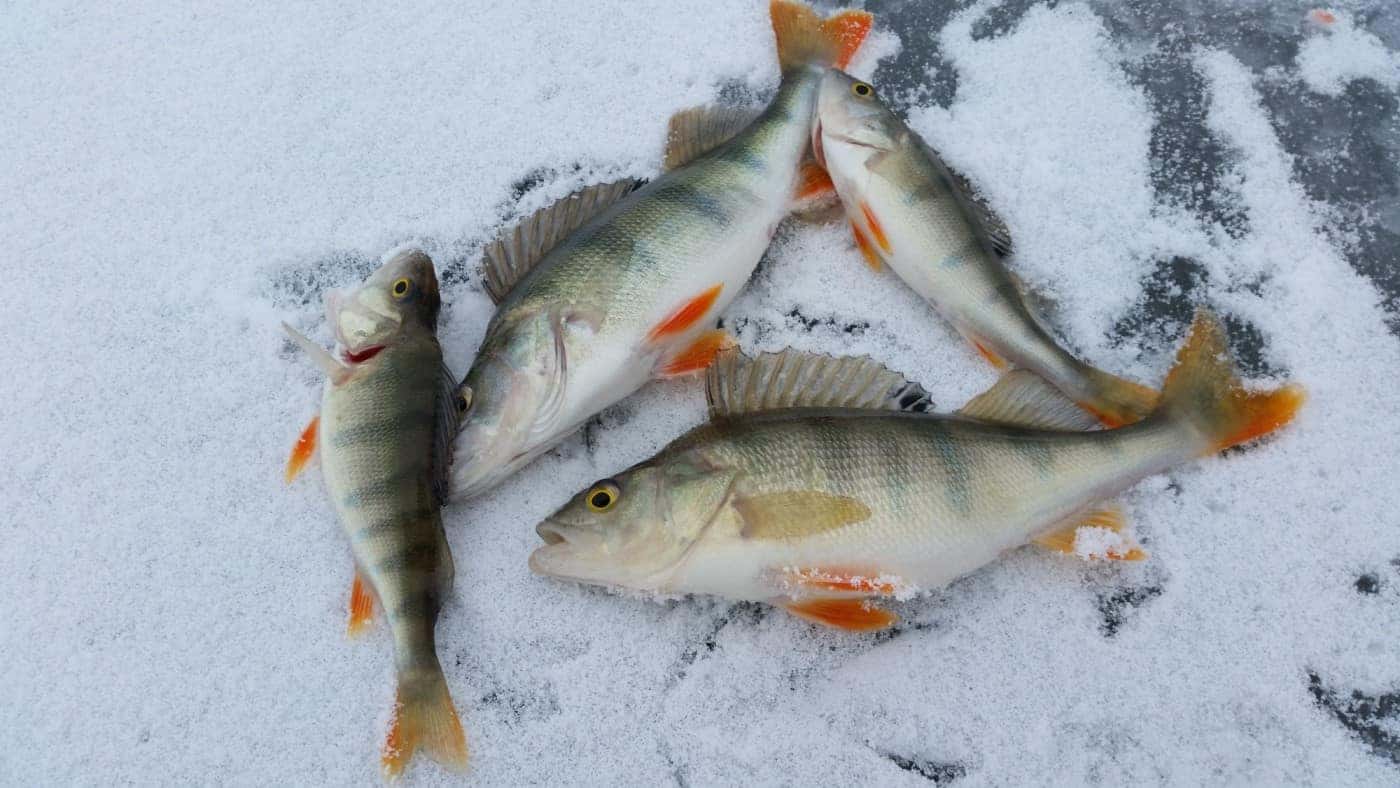
Ice fishing seems like a simple enough concept, right? You cut a hole in the ice, drop a line in, and comfortably wait for a fish to take your bait.
Wrong. It’s a lot more involved than that.
In addition to special equipment for cutting holes and protecting your gear, you’ll need to protect yourself from the elements, as well. The amount of ice fishing gear out there is endless, but you only need the most fundamental tools and accessories to get started.
Keep reading for a list of essential ice fishing gear you’ll need to reel in the best catch this winter.
1. Auger
An auger is at the top of the list of ice fishing must-have gear. You can’t ice fish without a hole, which is why you need an auger.
The more you have to drill, especially if you need to run tip-ups while you fish in a shelter, the harder the work. A quality auger makes this work effortless.
Look for augers with high-quality, sharp blades. You’ll need savers for clean ice and chippers for when it’s dirty.
It’s smart to also look for augers that offer hassle-free operation, speed, and easy portability. You’ll choose between a manual, convertible, gasoline, electric, or propane auger.
Manual
While manual augers are easy to use and super portable, they rely on your strength and fitness level to operate.
Convertible
Choose a convertible auger if you have a long drill rated for at least 700 inches of torque. These are the most expensive option.
Gasoline
Powerful and loud, gasoline augers can’t be used in a shelter, and they can difficult to refuel without spills.
Electric
While electric augers lack gasoline and propane augers’ speed and power, they’re quiet and emissions-free. You can use one in a shanty or shelter, and they’re easy to operate.
Propane
While propane augers can be a little harder to operate than gasoline ones, they’re great performers and easy to refuel. You can also use these indoors as they’re nearly emissions-free.
2. Skimmer
You can cure some of the headaches caused by clearing holes of ice with the right skimmer. Skimmers are available in lightweight plastic and aluminum if you’re on a budget. If you’re looking to splurge, choose solid steel construction—they’re best for bashing holes in the ice.
When choosing a skimmer, look for a sturdy one. Skimmers must take a beating, and you’ll abuse the tool over and over again. As plastic skimmer likely won’t last through the season, and aluminum ones are prone to bending.
3. Reels
You’ll want to purchase various reels to take out onto the ice, yet there are a few that are superior when ice fishing. Unless you need top-notch casting performance or a heavy-duty reel, bait casters are unnecessary. And closed-faced reels tend to freeze.
When jigging in cold water, look for straight-line or spinning reels.
Straight-line (also called in-line) reels use a large, straight-line spool to offer twist-free performance while jigging. Since they’re simple machines, you’ll face fewer problems in freezing temperatures. The downside to straight-line reels? They tend to be hard to set when using ultra-light tackle, and their drag systems aren’t up to par with alternatives.
Spinning reels are ideal for deadstick fishing and live bait. They have superior drag systems, and they’re simple to operate, although your line may twist while jigging. Look for spinning reels with drag adjustment knobs on their spools—these allow for direct mechanical braking.
4. Line
Choosing the proper line for your rod and reel is critical. The most common types of lines are braided, fluorocarbon, and monofilament.
Monofilament Line
The monofilament line is best in low-visibility and presents well because it floats. It’s also knot friendly, which is essential when your hands are cold.
Depending on the use, a monofilament line can be useful because it stretches. For shallow fishing, this is ideal. When fishing in deep water, however, the line becomes less sensitive.
Fluorocarbon Line
Most anglers want a line that sinks because it’s ideal for jigging. The fluorocarbon line is abrasion-resistant, super tough, waterproof, and nearly invisible.
However, this line tends to remember any shape it is forced into, which may cause problems with spinning reels when jigging in light tests. Because fluorocarbon is not easy to tie, you must adjust your knots to get the line to hold.
Braided Line
When your goal is to catch monster fish, braided line is the choice for you. It’s the strongest of the three types of line and forgets the shape of your spool—as it’s limp compared to the other two. The limpness makes it an excellent choice for jigging.
The braided line doesn’t stretch, so it’s also the most sensitive option. However, keep in mind that because it won’t stretch, it’s the most prone to breaking when suddenly shocked. It’s also not waterproof or knot-friendly, so it may freeze.
5. Flashers
Ice fishers are really particular about their flashers, which is easily understood once you realize how many options exist.
When selecting a flasher, look for features such as a bright, easy to read dial, long battery life, superior target separation, and a transducer capable of hitting a wide—but not too wide—cone angle.
6. Heaters
If you’re looking for an efficient and safe way to keep your fishing shanty, cabin, or shelter warm in freezing weather, you’ll need a quality propane heater.
Please note: You should never use an outdoor heater indoors, even if your shelter is vented. It’s rare to find good propane heaters rated for indoor use. Look for high-quality propane heaters loaded with safety features, like Mr. Heater Buddy.
These heaters have low oxygen sensors that will turn off the heater if it detects unacceptable carbon monoxide levels. They also have a tip shut-off switch to prevent accidents. You can stay cozy on the ice by producing a snug 4,000 BTUs an hour.
7. Tip-Ups
Ah, the ability to jig from in the comfort of a warm shelter. Tip-ups maximize the chance of catching fish by allowing fishers to run a few at various depths with different baits.
Tip-ups are a good investment if you plan to fish for more than one type of fish at a time, such as muskie with tip-ups and bluegill with a rod and reel.
When looking for tip-ups, you want them to be tough but sensitive. They should be reliable in the wind as well as easy to transport and store.
There are three common tip-up designs: polar, thermal, and cross-style.
Polar or Rail Style Tip-Ups
These tip-ups have a rectangular base. The cylinder and flag fold flat for effortless storage and transport—they’re easy to store and carry in a bucket.
The best polar tip-ups are lightweight, easy to use, reliable, and sturdy, but they’re prone to freeze in super cold temperatures. If you go with polar tip-ups, invest in a fishing hole insulator cover to provide insulation that protects the water below your set up. These tip-ups can also be hard to see when in deep snow.
Thermal Tip-Ups
These are round tip-ups designed to sit on top of a hole and shield it from the weather. Many fishers appreciate this design because it’s easy to use and transport. However, these tip-ups are also harder to see in deep snow. If you use a 10-inch auger, these can drop into the ice and freeze to the sides of your hole.
Cross-Style Tip-Ups
These tip-ups have a tall, plus-shaped base and operate like a polar tip-up—but a lot heavier. If you’re fishing where the snow is deep, a cross-style tip-up is ideal as they provide outstanding visibility. This all comes with a price, however, because they’re harder to transport.
8. Shelter
How can you enjoy ice fishing as the wind is howling across the eyes, threatening to seize your face with frostbite?
It would help if you had protection from the elements to enjoy ice fishing, which means a modern, portable shelter is a must-have for any serious angler.
When searching for a portable shelter, you’ll find two common types: flip-overs and hubs.
Flip-Over Shelters
Flip-overs are plastic sheds that feature a telescoping frame. You can expand the windproof shelter with built-in seating by lifting the frame up and over. These flip-overs are easy to set up, but they’re large and heavy.
If you’re making many trips across the ice, they become difficult to transport. Flip-over shelters also take up a lot of room when in storage.
Hub Shelters
Hub shelters are designed like a modern tent. They’re easy to erect thanks to an internal folding frame. They’re a popular option because they’re lightweight, which makes them easy to store and transport.
While hubs are the most convenient shelter option, they’re difficult to set up on windy days.
When shopping for a portable shelter, choose one that’s big enough for you and a friend and that you can set up in less than a minute.
Ready to Grab Your Ice Fishing Gear?
As you now know, an ice fisher’s gearbox is much different than that of a freshwater angler. Special ice fishing gear is required to handle the type of fish and the elements you’ll be up against.
With this list, you’re on your way to selecting your own ice fishing essential gear to improve your experience.
Once you get all of your supplies together, you’ll need a boat. Check out our available inventory, or give us a call at 888-971-5675 today.
0 comment(s) so far on Ice Fishing Gear Essentials