


Beginner’s Guide To Operating Snowmobiles
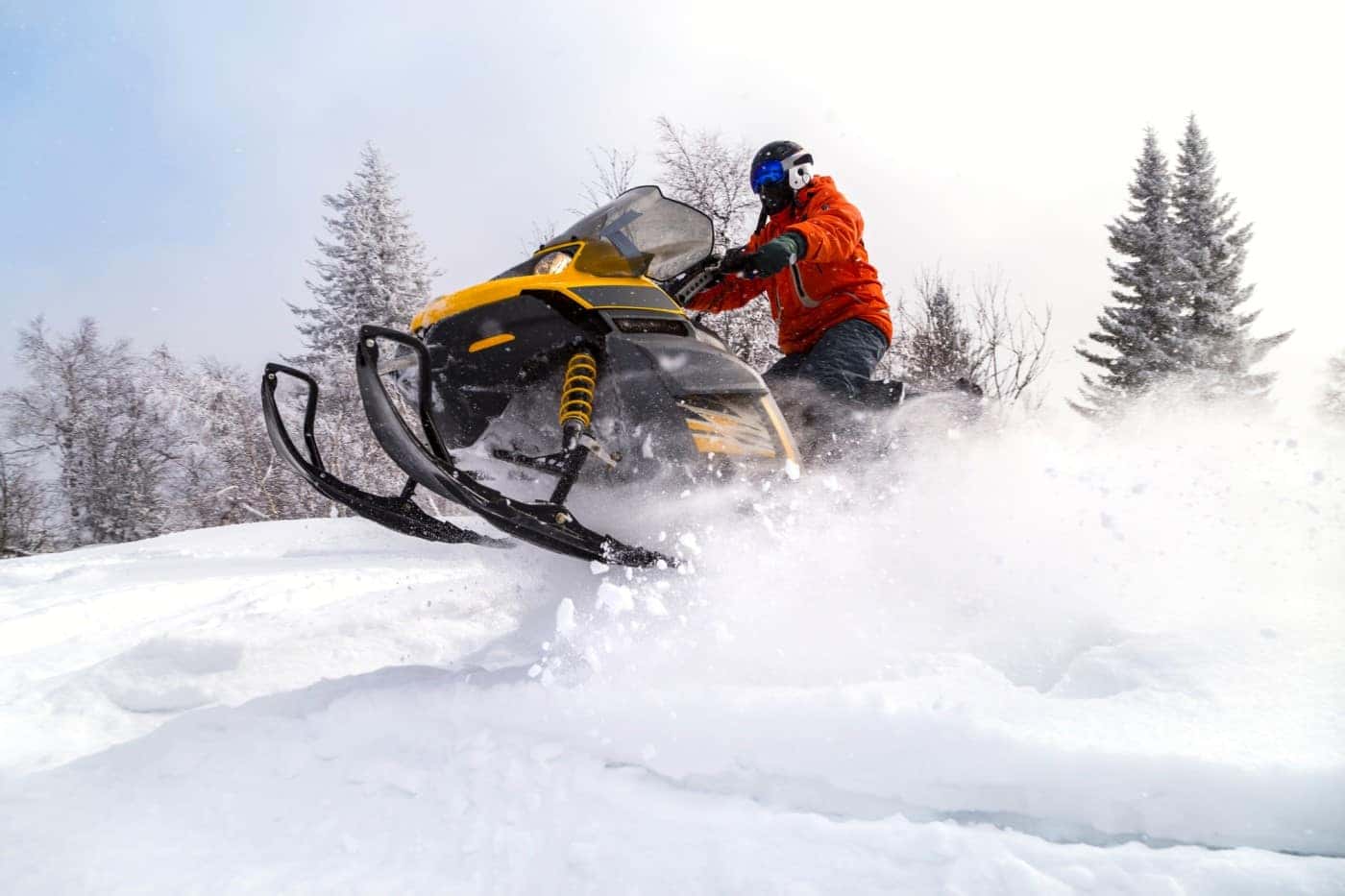
Most people don’t look forward to winter. Snow is seen as a hassle or an inconvenience.
But that’s because they don’t have a snowmobile. Those who own a snowmobile look forward to the first snowfall every year.
Snowmobile owners pull them out in the fall, while it’s still warm outside. They’re inspecting the spark plugs and clutches, adjusting the tracks and skis, changing the oil, all in anticipation of that first ride on the smooth, white playground all around them.
Want to finally beat the snow? Are you hoping to find a way not just to enjoy winter, but look forward to it all year?
Then it’s time to grab yours. But first, here’s everything you need to know about operating and owning a snowmobile.
What Are Snowmobiles and How Long Have They Been Around?
First off, if you want to be in-the-know, call them mountain sleds. Or you can call them motor sleds, snow scooters, or snowmachines. Either way, there’s no better way of getting up or down a hill covered in fresh snow.
The earliest attempt at designing a vehicle to travel on snow was in Quebec, in 1922. The first iteration was a propeller-driven sled designed by Joseph-Armand Bombardier. This eventually led to the first actual snowmobile which was produced in 1937.
Oh, and the first snowmobile fit 7 passengers in an enclosed cabin. It wasn’t until 1958 that the first single-person snowmobile was designed. Once this was released, snowmobiles exploded in popularity throughout Canada in the ’60 and ’70s.
This revolutionized transportation for those living in rural areas around Canada. Those who struggled to access healthcare or food supplies in the winter now had the ability to.
Snowmobiles today are small motorized vehicles designed exclusively to travel on snow and ice. People use them primarily for recreation and have become a major sport for millions around the world. In many areas, particularly those with flat elevations, snowmobiling has become the primary form of winter recreation.
Today, more than 1.5 million Canadians snowmobile each year. This had led to the creation of more than 700 snowmobile clubs in Canada alone along with tens of thousands of kilometres of organized trails.
How Do Snowmobiles Work?
For the beginner who is learning how to operate a snowmobile, it helps to understand the basic mechanical functions of the vehicle. If you’ve ever driven a motorcycle, there are a few similarities.
Snowmobiles have motorcycle-type headlights, seats, and windshields. They also have engines similar to most recreational watercraft. Obviously, they don’t have tires or hulls to glide across the ground.
Instead, snowmobiles use tracks and skis. The engine connects to the “wheels” which are like large gears or cogs. These gears then rotate, causing the tracks to move the snowmobile forward.
Snowmobile tracks are similar to those on a military tank, though much lighter and more flexible. These rough, wide tracks provide traction on slippery snow and ice.
Skis, located on the front of the snowmobile, steer the vehicle. Handlebars on a snowmobile are similar to that of a motorcycle or bicycle.
Snowmobiles need gasoline to run. Most will run perfectly fine on regular 87 octane gas, though be sure to read your owner’s manual or consult the manufacturer about your specific model.
How to Drive a Snowmobile
Before you drive any snowmobile, you should always give it a quick inspection. Look for dents, loose gears, and ensure everything is working as it should.
Once you turn the vehicle on, let it sit idle for about 5 minutes to warm up. Shift into neutral and either press the electric starter or pull the starter cord.
To accelerate, pull the throttle gently. Maintain a comfortable speed, especially as you are learning. When turning, it’s important to lean into the turn.
Riding on packed trails is different than riding on fresh snow. Trails are much easier to learn how to drive safely.
When riding through deep snow, your body is much more involved. You’ll want to drive faster to keep from getting stuck.
You’ll also want to keep the sled balanced. When you feel it pulling in one direction, lean to the other side in order to maintain your course. Make sure to drive with others when driving through deep snow.
Where Can You Use a Snowmobile?
You can typically take a snowmobile anywhere. You technically don’t need roads or trails, since you are on top of the snow. As long as the snow is deep enough, you won’t damage vegetation.
However, most people do ride on established snowmobile trails. There are over 120,000 kilometres of organized snowmobile trails in Canada. To use these trails, drivers must have a trail permit and may only operate a snowmobile after authorities declare them open.
Multiple enforcement agencies patrol these trails. If a trail requires a permit, be sure to have the appropriate decal affixed to your sled.
There are also some public parks and conservation areas that allow snowmobiles. In many parts of the country, you can find tour operators offering backcountry expeditions as well.
You cannot drive on private property unless you have explicit permission. There are some roads that permit snowmobiles to ride on or along. Don’t drive on roads (except to cross them) unless you know snowmobiles are allowed.
Snowmobiling Gear
You’ll need the right snowmobile gear in order to have fun and stay safe. Helmets are required by law. Never be caught without one.
Snowmobile helmets are full-faced, including an anti-fog visor. There are different styles of helmets depending on what type of riding you do most.
The speed you are moving at on a snowmobile will exaggerate the winter cold and wind. You’ll want water-resistant outer layers to keep the elements out. You should also have moisture-wicking layers underneath to regulate body temperature and prevent excess moisture inside.
Snowmobile boots and gloves are a necessity too to keep you safe, comfortable, able to properly control your sled.
Snowmobiling Near Me
If you have never driven a snowmobile, it doesn’t hurt to try before you buy. There are plenty of places you can rent a snowmobile or participate in a tour. For those in Manitoba, we offer daily snowmobile rentals.
We have an extensive network of trails throughout the province. Though we are confident that once you give the snowmachine a try on these gorgeous trails, you’ll wish you had your own.
Getting a Snowmobile
It’s Canada, The entire country is covered in snow all winter long. You will never regret buying a snowmobile.
There are many different types of snowmobiles available. Your riding style will dictate which option is best. You can also get a kids snowmobile once they are old enough to drive their own sled.
If you need help deciding on a snowmobile, we are always available to help. You can stop into the store or contact us online today. Financing options are available for snowmobiles.
Once you get a snowmobile, used or new, you must register it within 6 days. Keep proof of registration in your snowmobile at all times.
Storing a Snowmobile
Once you fall in love with your new mountain sled, it can be hard to think about storing it for months and months. Alas, it must rest for the season, allowing you time to spend on your boat with a fishing rod in hand.
It helps to have extra space in your garage, or large storage shed to keep your snowmobile in over the summer. Many people also leave them at their northern vacation homes.
To prepare your sled for storage, make sure to clean it well. Get a snowmobile cover to keep it clean and free from debris.
Leave some fuel in the tank to keep everything lubricated, but make sure to add some fuel stabilizer to ensure the long-sitting fuel doesn’t cause corrosion. You’ll earn bonus points if you have a jack and can lift the sled off the ground.
Other than that, make sure to take lots of pictures during the winter so you can stare at them all summer, anticipating that fresh snow once more.
Other Things You Need to Know When Using A Snowmobile
When driving your snowmobile in Canada, there are a number of other rules and regulations you need to follow. While each province may vary slightly, you can expect to follow these across the country.
First off, anyone operating a snowmobile needs a valid driver’s license or snowmobile operator’s card. Your snowmobile needs to be registered and you need to purchase liability insurance. You must carry your license, proof of registration, and proof of insurance whenever you drive your snowmobile off your own property.
There are speed limits for snowmobiles. Be sure to follow these or you can get pulled over.
You usually cannot drive on the road or shoulder of roads. But you can cross in order to get to the other side when traffic has cleared.
For those new to snowmobiling, young or old, it never hurts to take an instructional course. Especially if you’d like to own your own, understanding these snowmachines more in-depth can only help.
Can Winter Be Your Favorite Season?
And just like that, you have a new favourite activity. Snowmobiling is a blast. Finally, you can get outside in the winter and explore places you never thought possible on a snowmobile.
You can see your local area from a new perspective. Or you can travel to some of Canada’s most renowned winter destinations for the most incredible snow trails, exhilarating rides, and mind-blowing views.
If you are ready to call one of these mountain sleds your own, check out our current snowmobiles for sale and give us a call today.
0 comment(s) so far on Beginner’s Guide To Operating Snowmobiles